
Dante und das Universum
Wir verbinden Dantes Dichtung mit künstlicher Intelligenz mit der um neue Welten zu entdecken.


Starlink und K I - Zentren im All
Was erforschen wir?
The way from Starlink to AI hubs in space, and ultimately to habitable planets, illustrates a remarkable trajectory of innovation and ambition that speaks to humanity's desire to explore and inhabit the cosmos. This odyssey can be understood through several interrelated phases: the inception of satellite technology, the evolution of artificial intelligence, the establishment of space habitats, and the quest for exoplanets that can support human life.
The Launch of Starlink, developed by SpaceX and founded by Elon Musk, marks a significant advancement in global telecommunications. Launched in 2019, Starlink's primary goal is to provide high-speed internet access to remote and underserved areas across the globe. Employing a vast constellation of low Earth orbit (LEO) satellites, Starlink aims to blanket the Earth in a network of connectivity, revolutionizing how we communicate and access information. This satellite constellation is not just about internet access; it represents a crucial step in humanity's readiness for interplanetary communication. As we extend our reach into space, the need for a reliable and robust communication network becomes increasingly essential. Starlink's technology lays the groundwork for future missions in space by ensuring that data can be sent and received efficiently, regardless of the distance.
Transitioning to AI Hubs in Space As we lay a sophisticated communication network with Starlink, the next logical progression is the establishment of AI hubs in space. Artificial intelligence is poised to play a transformative role in various sectors, particularly in space exploration and colonization. These AI hubs could serve multiple functions, from managing spacecraft and analyzing data gathered from planetary surfaces to optimizing life-support systems in space habitats. The practical application of AI in the context of space centers around its capability to process massive amounts of data quickly and accurately. By deploying AI systems, humans could automate many of the mundane tasks involved in daily operations at space outposts, allowing astronauts to focus on critical scientific research and exploration. Moreover, AI can enhance the management of resources, optimize energy consumption, and assist in the troubleshooting of technical issues that can occur in the harsh environment of space. In this regard, establishing AI hubs in strategic locations throughout our solar system would not only bolster human missions but also make them more sustainable. ### Building Habitable Environments With robust communication and AI at our disposal, we can begin to address one of the most significant challenges of space exploration: creating sustainable habitats for human life. The development of construction techniques and materials capable of withstanding the brutal conditions of other planets is critical. Initiatives to build habitats on the Moon and Mars have already begun, relying on 3D printing technology that utilizes local resources, such as regolith, to produce structures. In addition to physical habitats, designing ecosystems that can support human life—such as hydroponic farms and recycling systems for air and water—will be necessary. The inclusion of AI in these systems can further optimize food production, manage atmospheric conditions, and ensure that these habitats remain livable over extended periods. The transition from orbiting satellites to sprawling habitats on planetary surfaces exemplifies the multi-faceted approach needed to carry humanity’s reach beyond Earth.
The Search for Habitable Planets While the technology to maintain life in space is rapidly advancing, the ultimate destination of this journey lies in identifying and inhabiting exoplanets beyond our solar system. The search for habitable planets is a multi-decade endeavor, fueled by missions involving advanced telescopes and space probes that seek to discover Earth-like planets in the habitable zone of distant stars. Astronomical missions, such as those conducted by NASA's Kepler mission and the Transiting Exoplanet Survey Satellite (TESS), have made groundbreaking discoveries, identifying thousands of exoplanets. Of those, several have been noted for their potential habitability, possessing the right conditions that could support liquid water and, potentially, life as we know it. The future of these explorations leans heavily on data analysis powered by AI, enabling researchers to sift through vast datasets, identify promising candidates for further study, and assemble comprehensive profiles of these uncharted worlds. Plans for interstellar travel, while still in their infancy, would depend on the foundational technologies developed by pioneering ventures like Starlink and the establishment of AI in space.
The Interconnected Future The progression from Starlink, through AI hubs, to the establishment of viable habitats at the end of the 21 century on other planets, represents a continuum of exploration, discovery, and innovation. Each step is interlinked, reinforcing the necessity of building a societal framework that can sustain life beyond Earth. As each phase develops, humanity faces ethical considerations that must be addressed, such as the preservation of alien ecosystems, the importance of sustainable practices, and the collaborative roles of nations and corporations in space. Not only does this journey reflect humanity's indomitable spirit of exploration, but it also calls for a responsible stewardship of the cosmos. With each technological milestone, we inch closer to a future where interplanetary travel becomes a reality, and our destinies extend far beyond the confines of Earth. In conclusion, the evolution from Starlink’s innovative satellite network to the concept of AI hubs and the quest for habitable planets embody humanity's profound connection to space and our aspiration to thrive beyond our earthly origins.
This journey is not just a representation of our past and present ambitions, but a pathway to our future among the stars.
Welche Daten verwenden wir?
Von Starlink zu K I-Zentren im All
Projekte


Sternenkarte


Galaxien


Daten
Entdeckungen
email: ceng1@gmx.de © 2026 - All rights reserved.
Das Ende der Reise - Aufstieg zum Empyreon
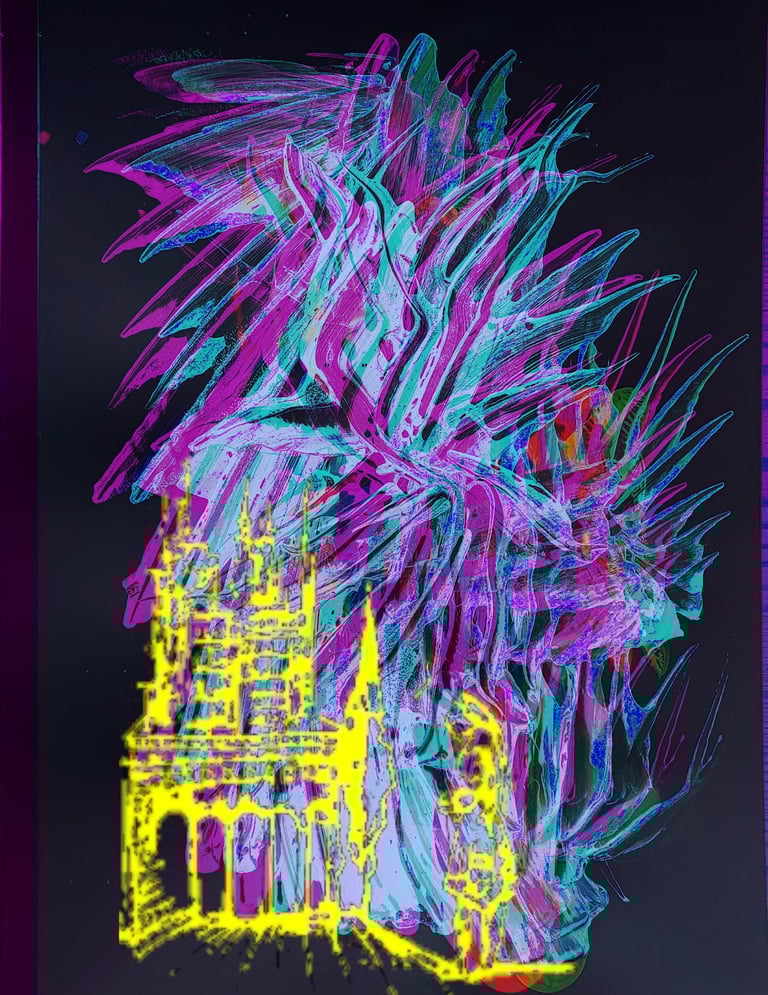


End of the journey
Psalm 90 -10
Unser Leben währet siebzig Jahre,
und wenn's hoch kommt, so sind's achtzig Jahre,
und wenn's köstlich gewesen ist, so ist es Mühe und Arbeit gewesen;
denn es fährt schnell dahin, als flögen wir davon.